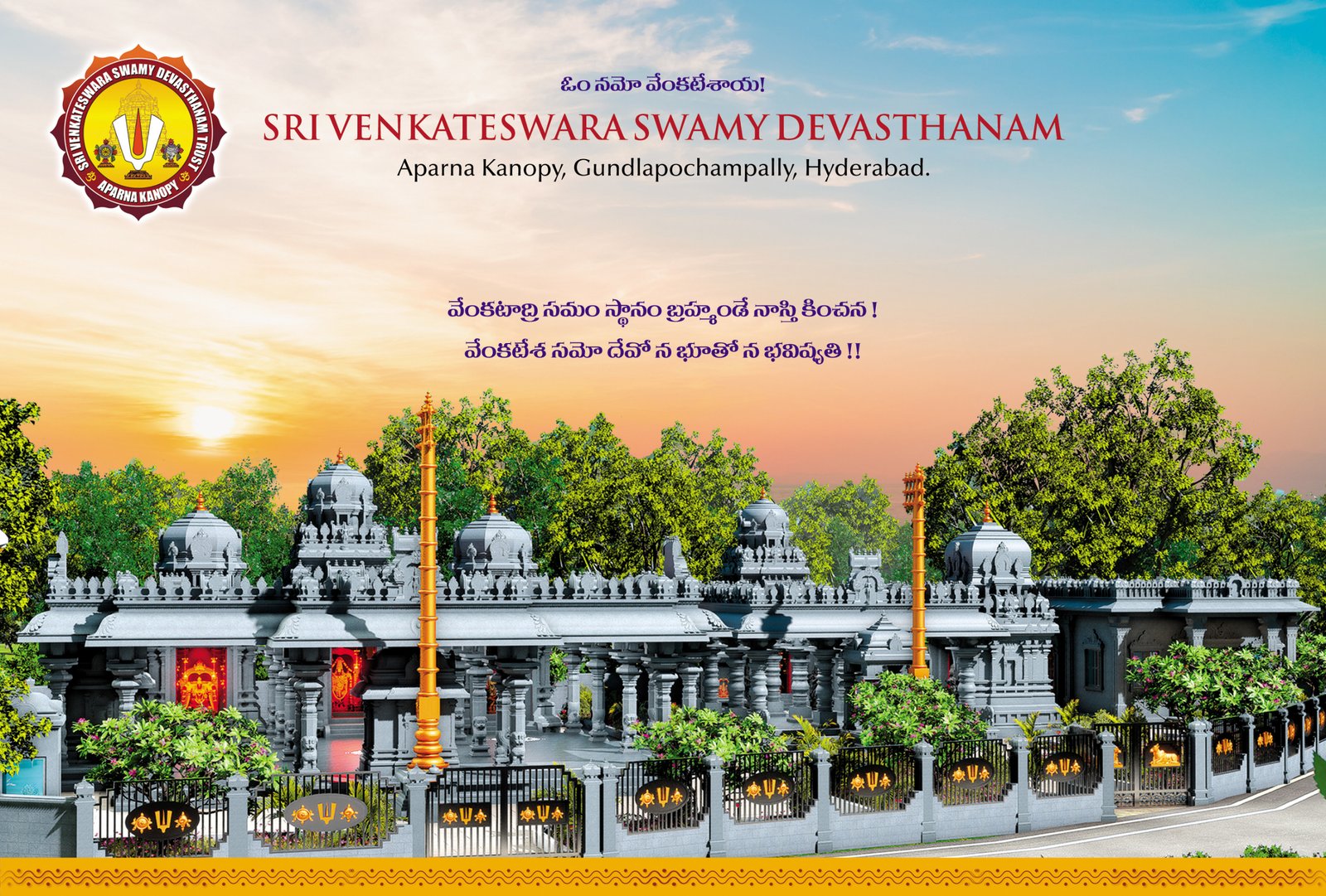
Trust Logo

SRI VENKATESWARA SWAMY DEVASTHANAM TRUST

Aparna Kanopy, Gundlapochampally, Hyderabad | Reg. No. 119/2025

ఓం నమో వెంకటేశాయ!

A Divine Sankalpa Commanded by Sri Venkateswara Swamy

"వెంకటాద్రి సమం స్థానం బ్రహ్మాండే నాస్తి కించన! వెంకటేశ సమో దేవో న భూతో న భవిష్యతి!!"

Offer Sacred Brick Seva Explore Temple Vision
Foundation & Vision

About Our Temple Development Initiative

Preserving traditions and building a spiritual sanctuary for the Aparna Kanopy community.

A Shared Community Vision

With the divine blessings of Sri Venkateswara Swamy, devotees of Aparna Kanopy have come together to preserve and further develop our beloved temple within the community premises. Over the years, this sacred space has become a cherished center for daily worship, bhajans, Kalyanams, spiritual gatherings, and festival celebrations.

The grand celebration of Sri Venkateswara Swamy Kalyanam, with the devoted participation of residents from all five societies—Tulip, Lotus, Jasmine, Marigold, and Yellowbells—beautifully reflected unity and shared devotion. To guide this endeavor transparently, the Aparna Kanopy Sri Venkateswara Swamy Devasthanam Trust (Reg. No. 119/2025) was established.

New Temple Vision
Significance of a Temple

A temple (Alayam) is the holy center where the individual soul (Jivatma) is guided towards union with the Supreme Soul (Paramatma) through Agama and Shilpa Shastras.

Auspicious Merits

According to the Purushottama Samhita, building a temple bestows merit equal to great Vedic sacrifices, freeing devotees from sins and granting prosperity and liberation.

Abode of Compassion

When a temple flourishes, it signifies the blossoming of Sanatana Dharma, nurturing society and standing as a living testimony of devotion.

Main Sanctum Sanctorum

Sri Venkateswara Swamy Temple

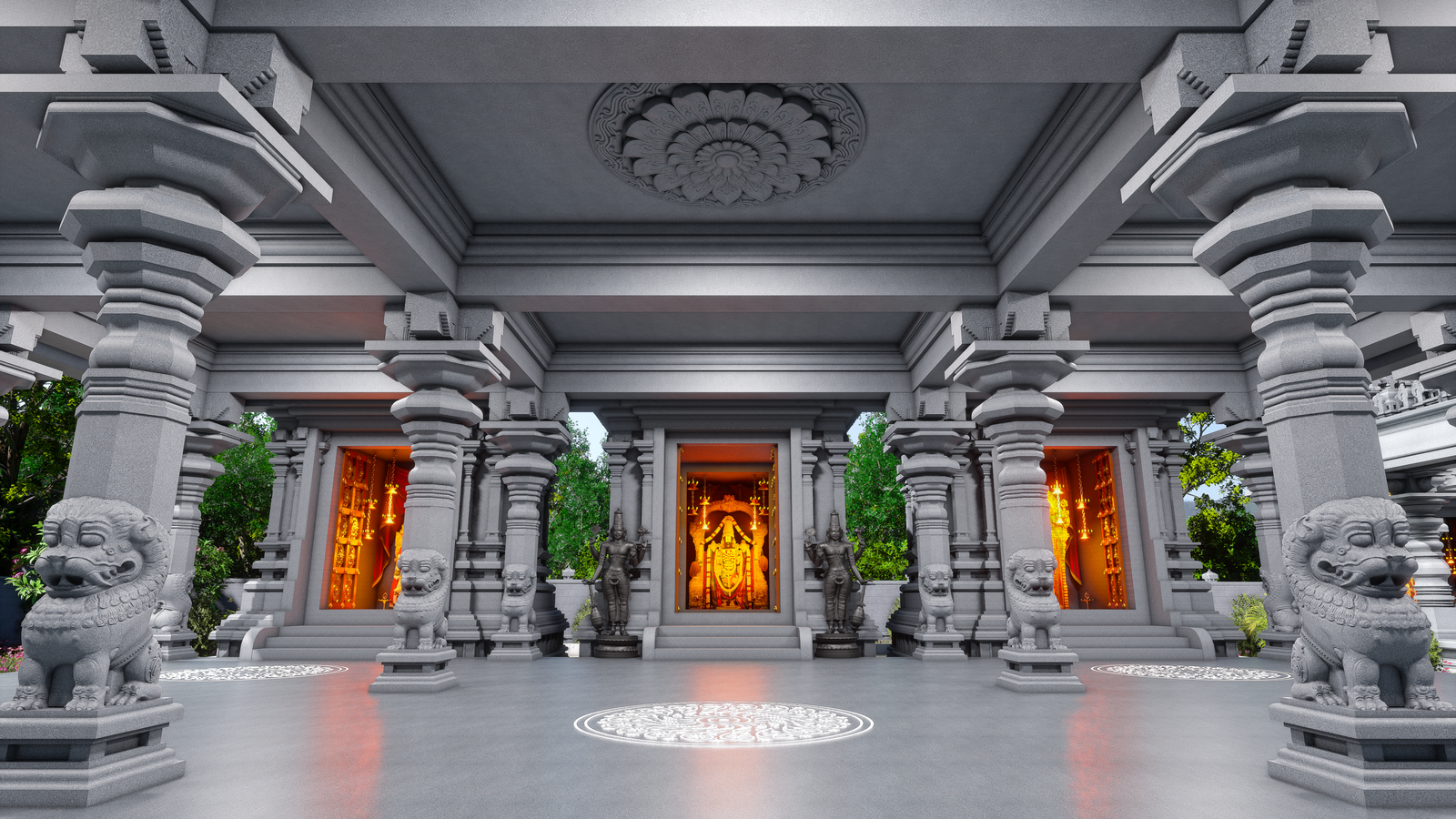
Garba Griha, Srivari Vimanam, Consorts, Dwarapalakas & Architecture

Sri Venkateswara Swamy

"Kalau Venkata Nayakah"

The Varaha Purana proclaims that Sri Venkateswara Swamy is the visible and living Divine of the Kali Yuga. In our temple, Sri Venkateswara Swamy presides in the main sanctum sanctorum designed with traditional components (Upapeetha, Adhishthana, Pada, Prastara, Vimana). Outer Devakoshtas enshrine Sri Narasimha Swamy, Sri Vaikuntha Narayana, and Sri Varaha Swamy.

Lord Venkateswara: Four-armed holding Shankha and Chakra, bearing Goddess Adi Lakshmi on His chest, showing Varada Mudra and Kati Hasta upon a lotus pedestal.

Srivari Vimanam: Designed in the spirit of Ananda Nilayam, blending Pallava and Chola styles with four seated forms of Sri Garudalwar in Anjali Mudra.

Padmavathi Thayar
Sri Padmavati Devi Ammavaru

Enshrined in a subsidiary sanctum on the right side of Lord Venkateswara, showering prosperity, grace, and divine compassion.

Sri Andal & Anjaneya
Sri Andal & Sri Anjaneya Swamy

Sri Andal (Goda Devi) enshrined on the left. Sri Anjaneya Swamy enshrined within the Maha Mandapa for courage, protection, and devotion.

Dwarapalakas
Dwarapalakas & Ramanujacharya

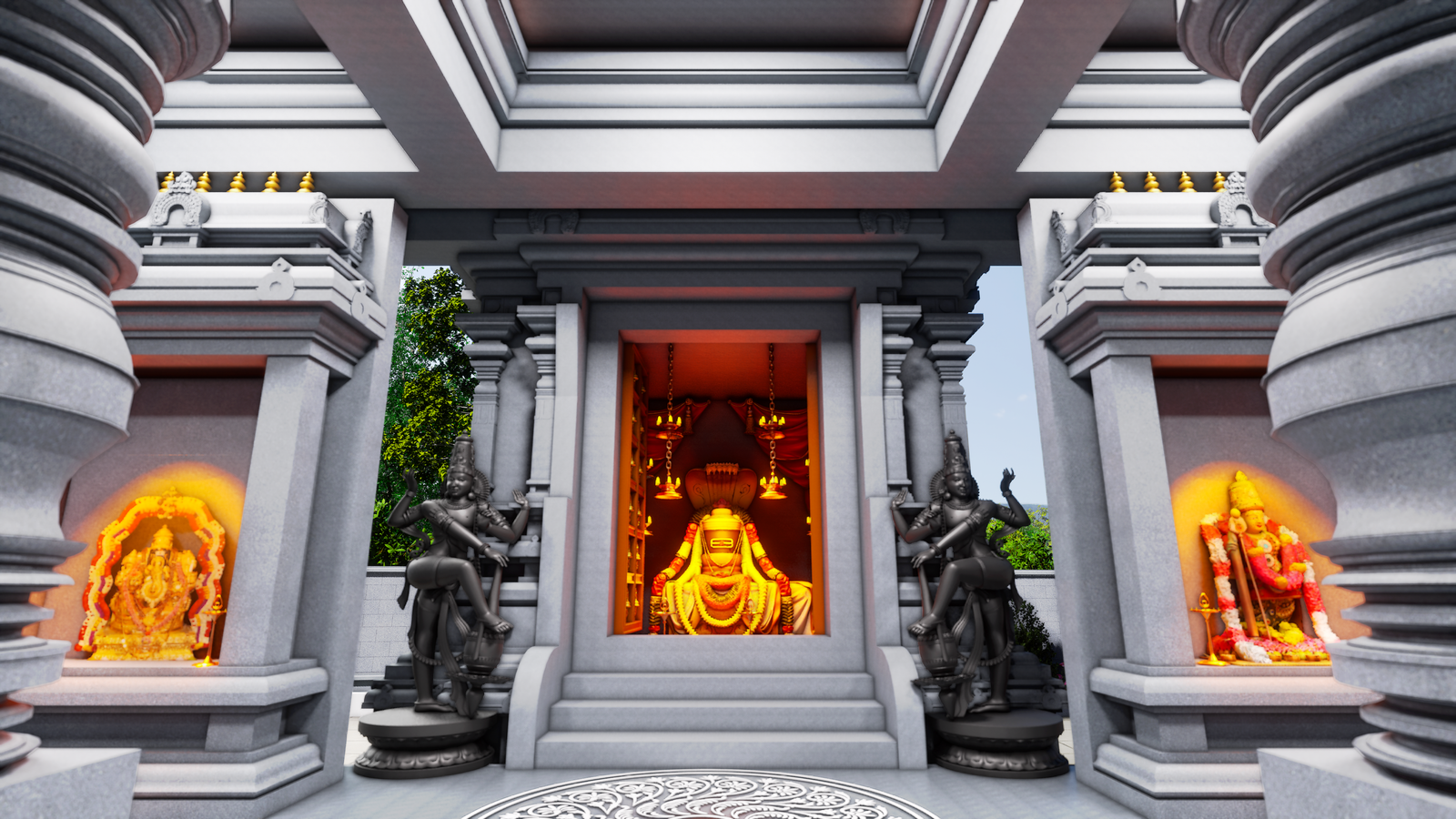
Sri Jaya and Sri Vijaya guard the entrance. Sri Ramanujacharya is enshrined in the Antarala, symbolizing Acharya Krupa and surrender.

Cosmic Principle of Transformation

Sri Shivalayam

Shiva Linga, Parvati Devi, Ganapati, Subrahmanya Swamy & Nandeeswara

Lord Shiva & Divine Mother Parvati

Lord Shiva is worshipped in the sacred form of the Shiva Linga upon a beautifully adorned Panavattam, granting peace, purity, and spiritual upliftment.

Sri Parvati Devi Sannidhi: Enshrined in a sacred south-facing sanctum as the Divine Mother ("Ammala Gannayamma, Muggurammala Moolaputamma"), embodying nourishment and protection.

Parivara Devatas & Architecture

  • Ganapati & Subrahmanya Swamy: Enshrined on either side of Lord Shiva's sanctum, blessing devotees with wisdom and success.
  • Dwarapalakas: Kala and Mahakala stand on either side with Suchi Hasta gesture.
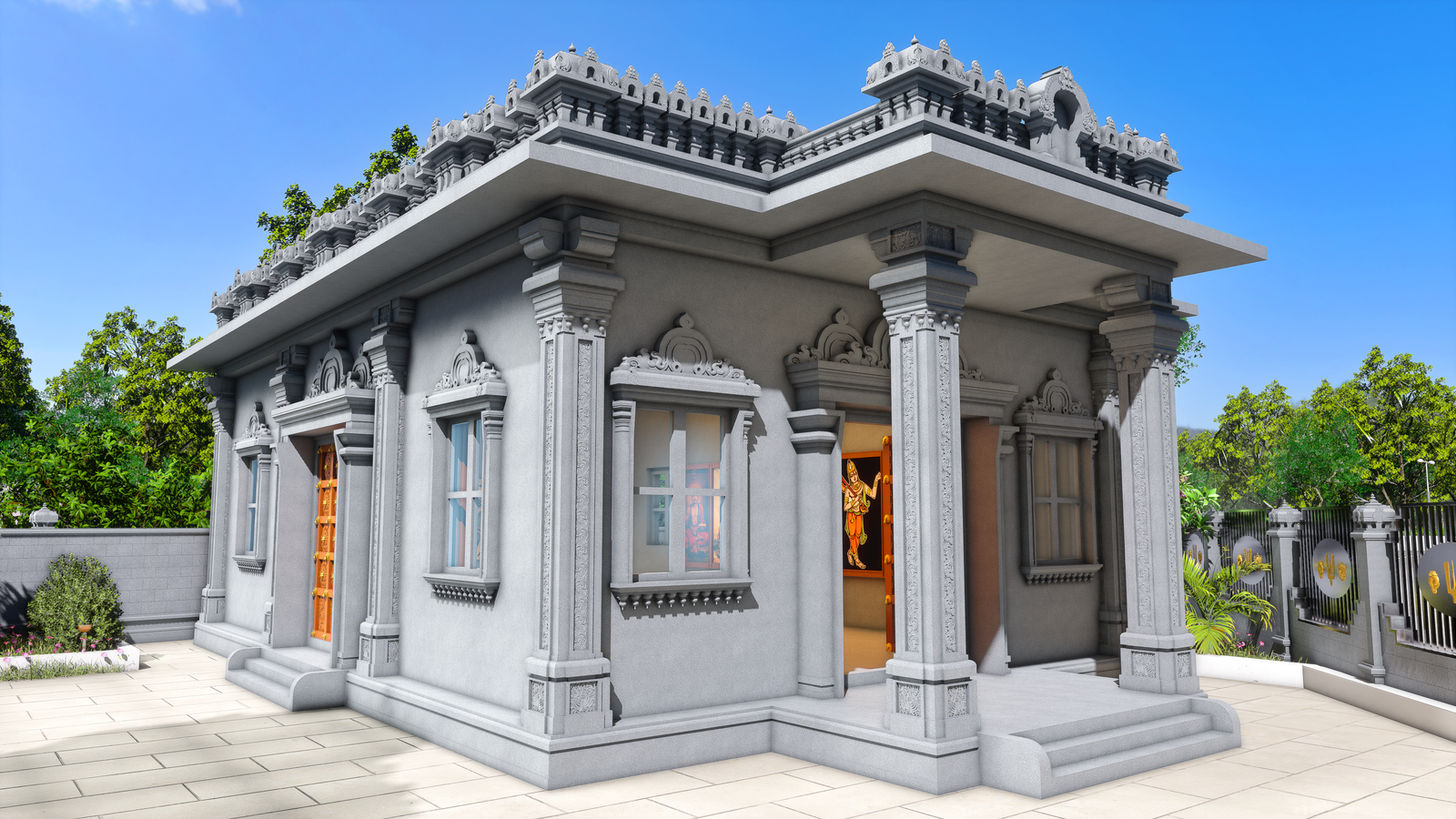
  • Maha Mandapa Pillars: Circular stone pillars inspired by Halebidu and Belur (Jakkana Acharya style).
  • Sri Nandeeswara: Enshrined directly opposite the Shiva Garbhagriha within a four-pillared Mandapa in constant darshan.
Culture & Community Harmony

Satsangam Hall

Navavidha Bhakti, Nataraja Swamy Stage, Acharyas & Wall of Gratitude

Navavidha Bhakti (Nine Modes of Devotion)

  1. Shravanam: Listening to divine stories and glories.
  2. Keertanam: Singing and chanting the Lord's names.
  3. Smaranam: Constant remembrance of the Lord.
  4. Pada Sevanam: Serving the holy feet of the Lord.
  5. Archanam: Offering worship, puja, and abhishekam.
  6. Vandanam: Bowing and offering heartfelt salutations.
  7. Dasyam: Serving as the Lord's humble servant.
  8. Sakhyam: Relating with divine friendship.
  9. Atma Nivedanam: Complete surrender to the Lord.

Spiritual Luminaries & Donor Wall

The Satsangam hall features a stage with an image of Sri Nataraja Swamy. Portraits of the great Acharyas (Adi Shankaracharya, Sri Ramanujacharya, Sri Madhwacharya) and saint-composers (Annamacharya, Tyagaraja Swamy, Bhakta Ramadasu, Chaitanya Mahaprabhu) are displayed.

Wall of Gratitude:

A permanent Donor Wall carrying the details of all devotees participating in this divine service is installed within the Satsangam hall.

Shared Community Target

Sacred Brick / Stone Seva Goals

Approximate required units (₹1,116 per unit) across all temple facilities

Sri Venkateswara Swamy Temple (SVT)~6,450 Bricks
Sri Padmavathi Thayar Temple (SPT)~2,240 Bricks
Sri Goda Devi Temple (SGD)~2,240 Bricks
Sri Garudalwar Temple (SGT)~1,345 Bricks
Sri Hanuman Temple (SHT)~1,345 Bricks
Sri Venkateswara Maha Mandapam (VMM)~21,375 Bricks
Sri Shiva Temple (SST)~5,645 Bricks
Sri Parvathi Devi Temple (SPD)~4,480 Bricks
Sri Shiva Maha Mandapam (SMM)~14,930 Bricks
Sri Nandi Mandapam (SNM)~895 Bricks
Satsanga Bhavan (SBG)~4,390 Bricks